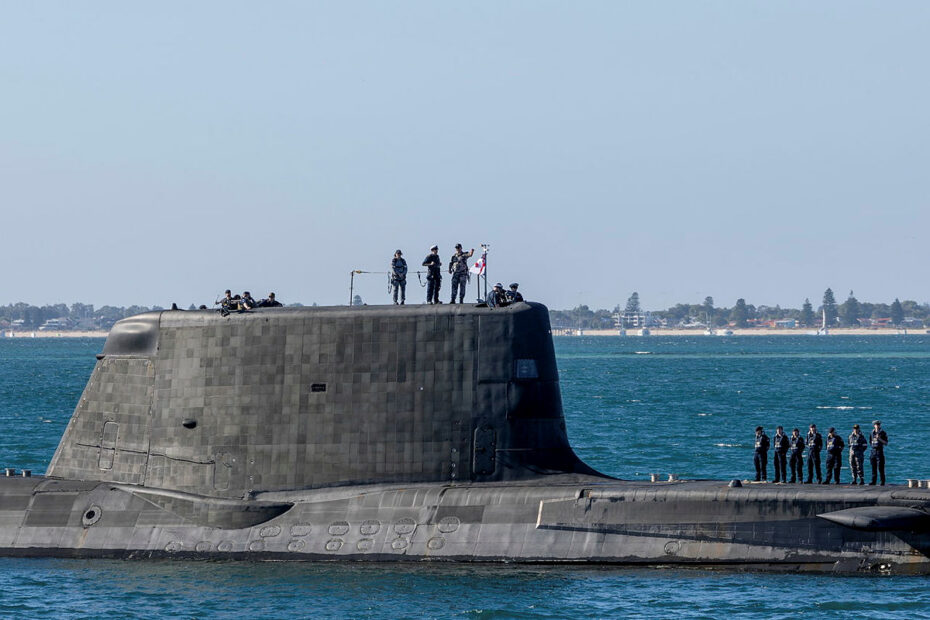
UK’s Astute-class submarine HMS Anson arrives at HMAS Stirling in February 2026 (Credit: LAC Thomas Clarke-Kelly/Department of Defence)
The sinking of an Iranian warship frigate IRIS Dena by an American nuclear-powered submarine off the coast of Sri Lanka in international waters on March 4th drew global attention for two reasons.
First, why India could not prevent this from happening as the warship was actually on its way back after participating in the International Fleet Review and a multilateral naval exercise Milan 2026 in which the sailors from the Royal Australian Navy (RAN) aboard Anzac Class frigate HMAS Warramunga also participated, among other 73 foreign countries friendly to India.
Several reports from the national news outlets have stated that the Indian Government, in fact, had offered a shelter to IRIS Dena and its 80 plus crew before it was torpedoed by the US.
The torpedo attack is the first of its kind in the modern US military history, as it happened for the first time since World War II. This underscores the fact that the submarines are not just merely used for intelligence gathering, but they can be used as the best cost-effective weapons in the event of conflict, as recently illustrated by an Ohio-class guided-missile nuclear submarine in Iranian nuclear sites.
It is safe to assume that either Indian naval intelligence may not have been aware of the presence of the US boat in the Indian Ocean, or they may have assumed the risk to Iranian ships was minimal, as the air strikes were viewed as limited to Middle East region alone. However, the spillover effects of the war on Iran are now being felt in the Indo-Pacific. But the Iranians are more focused on the US bases in the Middle Eastern countries, and the Iranian President Pezeshkian apologised to Arab countries today for the air strikes that have taken place since the war broke out on February 28.
The second reason is much more significant and has led to wider international speculation about the role of three RAN submariners in sinking the Iranian warship, as they were, and are still currently, inside the US submarine which sank the Iranian frigate.
Australian Prime Minister Anthony Alabense categorically refused claims of the role of Australian sailors’ involvement in sinking the Iranian warship, stating that their presence is solely to acquire nuclear and general submarine skills required for operating Virginia-Class submarines, as Australia is set to purchase three to five US Virginia-class boats by 2030 under the AUKUS Pillar I agreement.
Like India, Australia may seem to have been caught at the crosshairs among the US, Israel and Iran. However, the consequences for the RAN personnel for merely being present inside the US submarine which sank IRIS Dena speak lauder about the success of AUKUS pact than about how Iran will react and respond to Australia.
Some RAN sailors at Western Australia’s HMAS Striling are currently busy supporting the newly arrived nuclear-powered UK Astute-class submarine Anson under the scheduled Submarine Maintenance Period (SMP). As part of upskilling its own submariners, Australia started assigning personnel to the UK as well as US nuclear-powered submarines from early months of 2024.
According to the Australia’s Department of Defence website, there are currently over 100 RAN personnel who are undergoing training across the US including their participation in active regular submarine operations across the Indo-Pacific and elsewhere.
The number of RAN sailors and officers assigned to the UK and US submarines varies based on their nuclear training completion, prior experience on submarines, and existing operational demand. For example, the USS Vermont (SSN 792) included 13 RAN personnel in its crew of 134 when it arrived in HMAS Striling during October 2025 for a four-week SMP.
The presence of Australian sailors across US and UK submarines and naval bases shows that AUKUS is moving full steam ahead, and the Australian sailors are silently working towards the end goal of being self-sufficient and independent to operate Virgina-class boats from 2030. Some of the personnel bring years of experience operating Collins-class submarines. So, they are now trained to operate multiple classes of submarines.
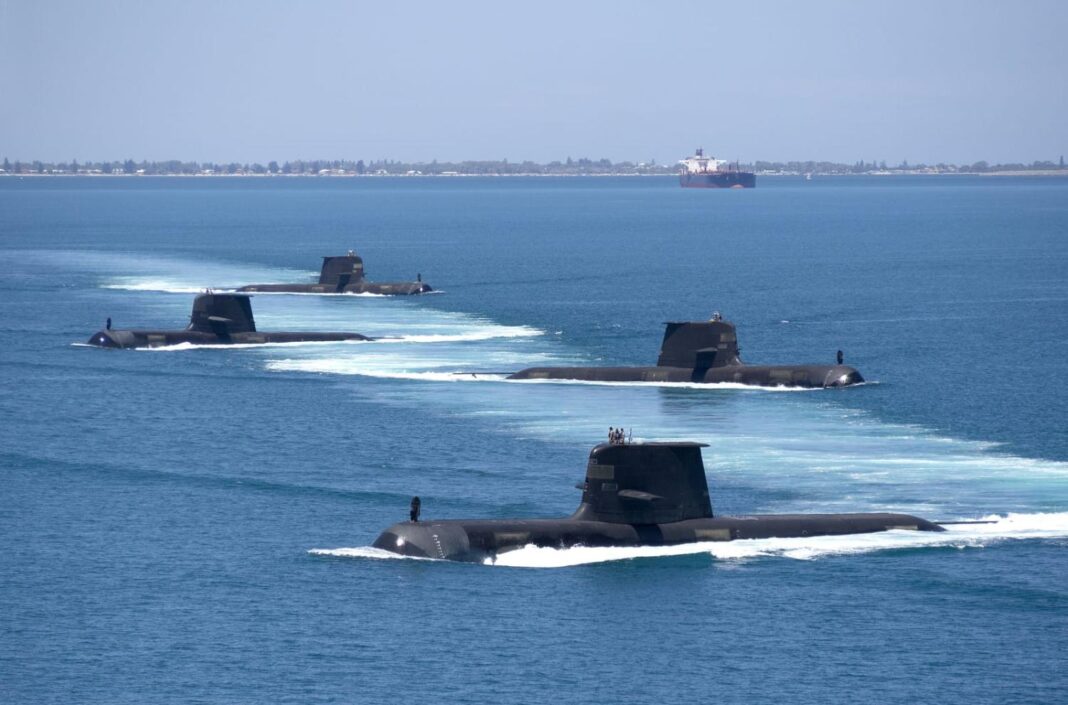
The transition from Collins- to Vergina-class submarines is underway, and HMAS Stirling is poised to receive a rotational presence of one UK and up to four US submarines from the start of 2027 under the Submarine Rotational Force – West (SRF-West). These submarines will be conventionally armed and nuclear-powered to help Australia operate its own future fleet of Virginia-class from 2030 as well as SSN-AUKUS submarines in 2040s.